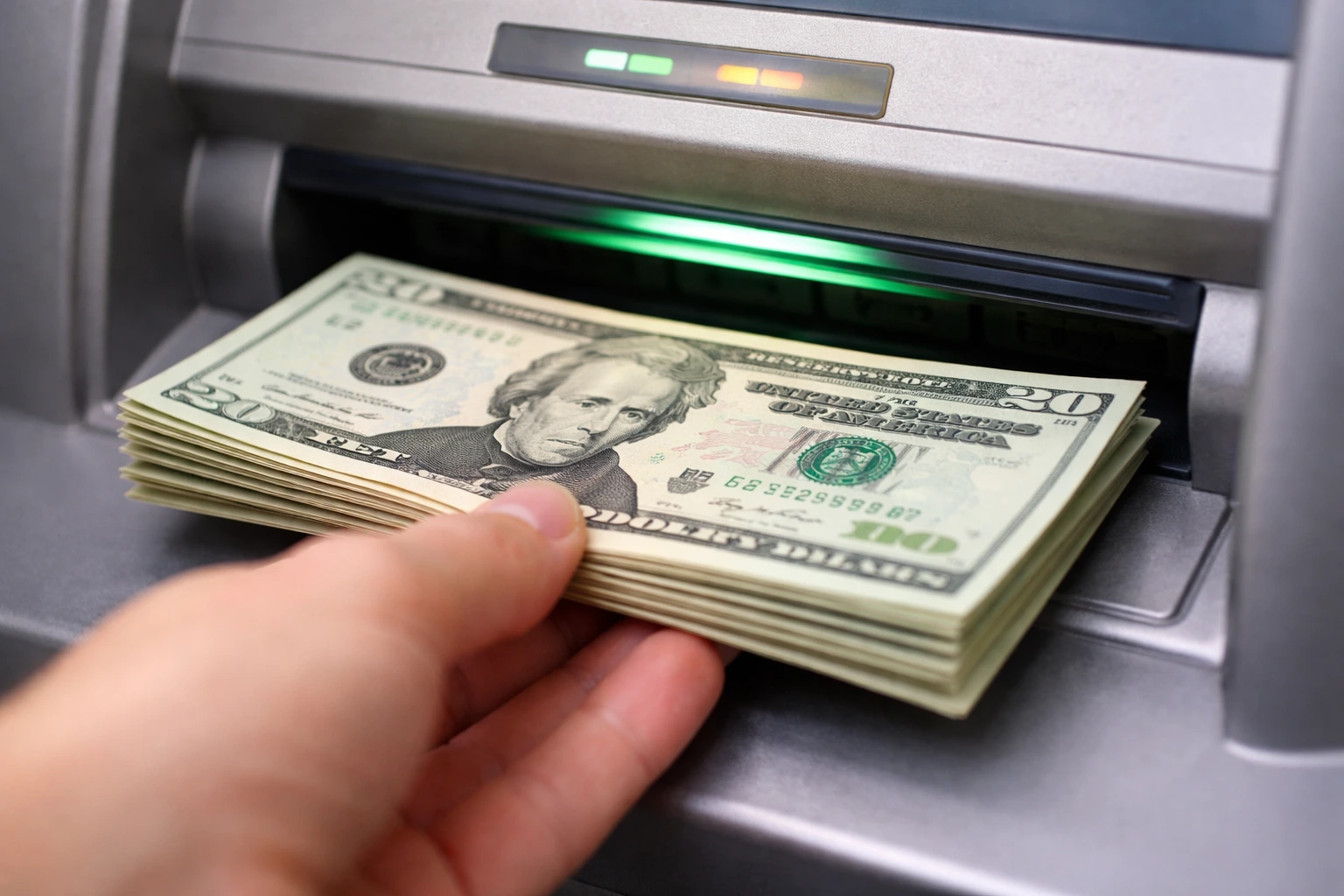
If you have ever withdrawn cash from an ATM, you have probably noticed that most machines dispense $20 bills instead of exact change. This is not random. ATMs are intentionally designed around $20 notes because they provide the best balance between machine capacity, security, and everyday withdrawal needs.
While some newer machines allow different denominations, the $20 bill remains the standard across most ATM networks in the United States.
Most ATMs dispense $20 bills because the machines are designed to balance storage capacity, refill efficiency, and common withdrawal amounts. Using primarily $20 notes allows ATMs to hold more total cash while serving the majority of withdrawal requests.
Quick Answer
- $20 bills balance machine storage capacity and demand
- Smaller bills run out quickly and require more refilling
- Larger bills increase fraud and theft risk
- ATM cash cassettes limit how many denominations can be loaded
- Most withdrawals are easily fulfilled using $20 bills
How ATM Cash Cassettes Work
Inside every ATM are several containers called cash cassettes. Each cassette holds only one type of bill. Most machines have two to four cassette slots, which means banks must carefully choose which denominations to load.
A common configuration might look like this:
- Cassette 1: $20 bills
- Cassette 2: $20 bills
- Cassette 3: $20 bills
- Cassette 4: Optional $10, $50, or $100 bills
Because each cassette takes up space, banks often dedicate most of the machine’s capacity to $20 bills, which serve the widest range of withdrawal amounts.
Why $20 Bills Became the ATM Standard
Several practical factors led banks to standardize ATMs around $20 bills.
- $20 bills satisfy most withdrawal amounts
- They allow machines to hold more total cash
- They reduce refill frequency for armored carriers
- They minimize financial risk if a machine is compromised
- They simplify ATM software and dispensing logic
Industry studies have shown that the $20 bill represents one of the most widely circulated denominations in the United States, which is another reason banks prioritize it in ATM machines.
For a broader overview of how different denominations are used in machines, see our guide to ATM bill denominations by bank.
For example, if a machine stocked mostly $5 or $10 bills, it would run out of cash much faster and require more frequent servicing.
Why ATM Withdrawals Are Usually Multiples of $20
Because most machines are stocked primarily with $20 bills, withdrawals must usually be requested in multiples of $20. If a machine only contains $20 notes, it cannot dispense amounts like $30 or $50.
This is why many ATMs require withdrawals such as $40, $60, $80, or $100. Machines with multiple bill types may allow more flexible withdrawal amounts.
For example:
- $100 withdrawal → five $20 bills
- $200 withdrawal → ten $20 bills
- $60 withdrawal → three $20 bills
If you want to learn more about typical withdrawal limits, see our guide to ATM withdrawal limits by bank.
Why Smaller Bills Are Rare in ATMs
Smaller bills such as $5 and $10 notes are less common in ATMs because they require more storage space and run out faster. A machine stocked heavily with small bills might require daily refilling.
However, some modern branch machines do offer these denominations. Learn more in our guide to ATMs that dispense $5 bills and ATMs that dispense $10 bills.
Where You Might Find Different ATM Denominations
Although $20 bills remain the standard, some upgraded ATMs allow customers to select different bill combinations.
- Full-service branch lobby ATMs
- Large bank locations in major cities
- Newer touchscreen “Smart ATMs”
- Business district banking centers
Some of these machines can dispense $50 or $100 notes for larger withdrawals. You can learn more in our guide to ATMs that dispense $50 and $100 bills.
How Modern ATMs Are Changing
Newer ATM models are becoming more flexible. Many banks now install machines that allow customers to choose their bill combinations during withdrawal.
These machines may support:
- Custom bill selection
- Multiple denominations
- Higher withdrawal limits
- Cardless mobile withdrawals
If you want to locate nearby machines that may offer additional options, start with our ATM near me resource.
Frequently Asked Questions
Why do ATMs usually dispense $20 bills?
Most ATMs dispense $20 bills because they balance machine storage capacity, security risk, and customer demand. Using mostly $20 bills allows machines to hold more total cash while supporting common withdrawal amounts.
Why can’t I withdraw $30 from an ATM?
If the ATM only contains $20 bills, it cannot dispense $30. The machine must provide amounts that match the denominations loaded in its cash cassettes.
Can ATMs dispense smaller bills like $5 or $10?
Some modern branch ATMs can dispense $5 or $10 bills, but these machines are less common because smaller bills run out faster.
Do any ATMs dispense $100 bills?
Yes. Some full-service bank branch ATMs dispense $50 or $100 bills, especially at locations with higher withdrawal volumes.
Are ATMs moving toward more bill options?
Yes. Many modern ATMs now allow customers to select custom bill combinations and support multiple denominations during withdrawals.
Key Takeaway
ATMs primarily dispense $20 bills because they provide the best balance between machine capacity, security, and everyday withdrawal needs. By stocking machines mostly with $20 notes, banks can keep ATMs filled longer, reduce servicing costs, and handle the majority of withdrawal requests efficiently.
